There is no single formula. The right method depends on the type of property and how a buyer will use it. We look at the approaches that fit your asset, often more than one, and recommend an independent appraisal when it helps everyone agree on value.
The income approach
For properties bought for the income they produce, such as apartment buildings and leased industrial, retail and office buildings, buyers and lenders start with the net operating income (NOI) and the capitalization rate (cap rate) that the market applies to similar properties.
A higher cap rate means more perceived risk and a lower value; a lower cap rate means less risk and a higher value. For buildings with leases that change over time, a discounted cash flow looks at the income year by year instead.
- Potential rentAll rent the property could earn at full occupancy, plus parking, storage and other income.
- Less vacancy and credit lossAn allowance for empty units and unpaid rent.
- Less operating expensesProperty taxes, insurance, utilities, repairs, maintenance and management that the owner pays.
- = Net operating incomeThe income left before mortgage payments and income tax.
- ÷ Cap rate = ValueFor example, an NOI of $120,000 at a 6.0% cap rate indicates a value of about $2,000,000.
Multifamily
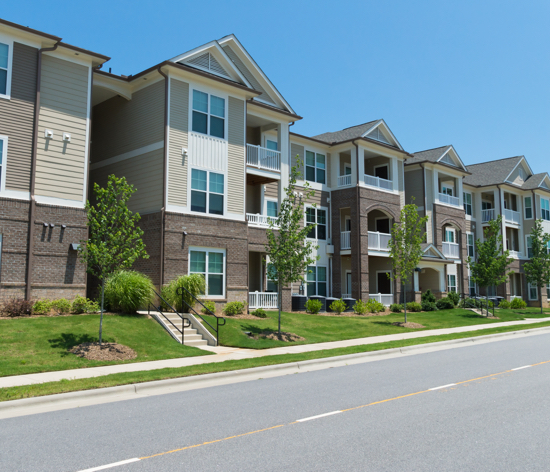
Income approach based on in-place rents and expenses, checked against comparable sales. We also look at the gap between current and market rents.
Leased industrial, retail and office
Income approach, weighing the lease terms, the tenant’s strength, the time left on each lease and how expenses are recovered. Multi-tenant buildings often call for a discounted cash flow.
Owner-occupied buildings
Direct comparison with recent sales of similar buildings, adjusted for location, size, condition and features, since the buyer is often a business that will use the space.
Development land
Comparable land sales plus a residual analysis: what zoning allows you to build, the value of the finished project, less construction costs and a developer’s profit.
Special-purpose properties
Schools, places of worship and similar buildings with few comparable sales may use the cost approach: land value plus the depreciated cost to replace the building.
Businesses for sale
Valued mainly on earnings, such as seller’s discretionary earnings or EBITDA, together with equipment, inventory and the lease in place.
If you are selling
We prepare a pro forma that shows your property the way a buyer and lender will see it, so you can set realistic expectations and present the income clearly.
If you are buying
We underwrite each opportunity from your side: income, expenses, financing and returns, so you can compare properties on the numbers.